Wednesday, April 29, 2009

Artist Statement

I am a creator inspired by text.

Hypnotized by music.

Observing people. 

Hoping to capture the moment.

I move as if gravity did not hold me down. 

The notes capture me. 

I, a conglomeration of things most dear to me, 

Coming together to make an individual a unique artist. 

Artistry is not everything I want but what I do with it. 


How can anyone define what they are? Is it by what they say they are or by what they do? Is it the opputunities that have been given to or what we have always wanted to do? 

How is art defined? Is it to be good at what you do? Can you be an artist of teaching? Is artist a definition for someone who is good at what they do?


I don’t want to define my artistry because I don’t want to be stuck with a definition of what people think I can do. In a world of acting I have many options of being different types of people.  This fact works against a statement about who I am as an actor.  

Depending on 

1. who I am surrounded by 

2.what opportunities find me 

3. what people know I can do and create 

I find myself as a different persona of myself . One of the crazy, wacky sides I have  

If in ballet class, people know me as a horrible dancer. In tap kids around me know me as a great dancer!  It is the situations and the people around me that mold who I am that day and bring out different qualities out from me. Each day my artistry and it's resemblence to my true self change. 

I am an actress if people know I am. I am bored in Anthropolgie class. I am a singer in recitals and in the Sirens and shy if I don’t know you at all. 

To myself I am first and foremost the person who is in love with becoming characters, who adores to sing out loud their stories, to needs to blend in the Sirens and to gains freedom through dance when no one is watching! I love to sit on the couch watching movies or TV to learn from the ones who have already done their research.  Seeing the little details they have chosen to bring to their craft. 

I collect trinkets that I have somehow created some sort of stupid meaning that persuades me to keep them. I am a pro in my own mind at capturing events with my camera and obsessively creating photo albums with this pictures in them, hoping to have others get as much as I have from these pictures. 

All of these capture moments I keep. I can change my personality for any type of situation like I do with my characters, dances, songs and photos. The closest thing that I can say about my artistry is that I am a acting-dancing-musical fiend who dabbles in photography, observing the little details of life and sharing them with others.

Saturday, April 25, 2009

Duane Hanson's Unreal Realities


While working a shift at the California Science Center, I flipped 

through a Human Body book for kids.  In this book was a

fascinating picture of a chubby shopper and her full shopping cart 

exemplifying the human body.  I had a double take when I

realize that the woman in the picture was a sculpture. 

This is where I discovered Duane Hanson. 

"Supermarket Shopper" 1970.

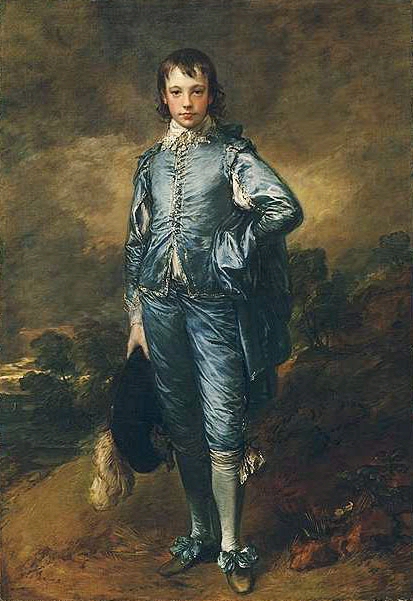
Hanson loved capturing the human form as early as age thirteen

with a sculpture of Thomas Gainsborough's The Blue Boy out of wood.


"Traveler" 1988, auto body filler, fiberglass and mixed media with accessories life size

In his lifetime, (January 17 1925-January 6, 1996) this Minnesota native, made many sculptures of people, 

most depicting life as a member of America’s middle class.

He made sculptures by making a cast from a live model and creating the sculpture from mediums like bronze, vinyl , oils, fiberglass and real accessories like actual used clothes from second hand stores.

"Queenie II" 1988, polychromed bronze, with accessories life size

All of these art pieces are very life like, life size and eerily uncanny 

to real middle class tourists, workers, shoppers and middle class 

people.  Which is why I was confused first seeing the shopper in the 

book at work and thinking her to be a real person.

His sculptures create a 3-D photograph that the viewer can walk around and study the situation the 

sculptures are in. Most of the sculptures capture a moment from real life. The audience can compare those 

casual and everyday moments that the art creates; grocery shopping, waiting with your luggage at the 

airport, or taking out the garbage, to their own everyday moments in their lives.

He captured real people and what they look like. He did not cast skinny models, bringing 

the audience closer to people who look like them.  This brings appreciation back to what the average 

population of Americans look like. This is a confidence booster to anyone that is not stick thin 

or perfect looking as he includes the details on his sculptures like bruises, veins, and each tiny hair on their 

body. 


"Woman with Child in Stroller" 1985, auto-body filler, polyvinyl and mixed media, with accessories

Life size


Hanson was known for capturing human dullness of everyday events as well as humanity.  Other scenes 


depicted bodybuilders, policemen and hard hat construction workers doing what they would be doing on a 


daily basis, working and bored out of  their mind.

Duane Hanson, Flea Market Vendor

"Flea Market Vendor" 1990, polychromed bronze, with accessories  life size

Almost as fitting as one of his sculptures, which seem to say “that’s life”,  Hanson died in 1996


from lymphatic cancer due to toxic resin and the fumes from  his own sculpting. 


"Man on a bench" 1997-98, vinyl, polychromed in oil, with accessories life size

Hanson's art career lasted thirty years, with his popularity in the 1960’s and 1970’s.

Thursday, April 23, 2009

WENDIGO is coming for you!


The Wacky Windigos is our group name and story telling is our game. We created a story board and a presentation that took the class through a process of pre-production of a movie.  Organizing everything that goes into filming a script is taken for granted as an actor. The pre-production is where everything comes together before filming the actors. Because the actors only show up at this point, when the movie is being filmed, they may be unaware of all the steps it takes to put together the movie before they arrive. 

All departments on a movie like script writers, lighting and costume designers, and the rest of the crew, must come together to understand the vision of the writer, producer and director, to make a cohesive movie.  
The script has to be finished, the producers and their money have to be lined up, the green light from a studio must be achieved- meaning they sign a contract to make the movie. These are all issues before the filming begins.  Our group focused on the in-between steps of selling our movie to the studios and the actual filming of it.  We created a storyboard to set up a scene from a script "Wendigo" that Morgen had written. 
 
We created this short story board from drawings and a power point using other movie's still images, also called screen shots, to compile the camera shots the writer may have envisioned for the movie.  In a real story board meeting, like I have seen on the special features portion of Monsters Inc., 
DVD the animators would tell the complete story of the movie to the big wigs of the Disney / Pixar company to get a sense 
of what the movie's plot might be or what the shots would potentially look like. They draw many boxes that show the action of the scene. (Monster's Inc. storyboard on the right illustrates the action of Boo and Sully.)  Each box is a relevant picture of what the script is saying.  Usually the writers point to each box as they tell the story to the big wigs and point to the box that goes along with their narrative to show what part of the story they are act and what the camera shots will look like.  Some of the drawings are created so that the cinematographer and the camera men, know exactly how to angle the camera and what type of shot the
 director wants.  We, as a group, took the ideas of Morgen's script and talked about what she envisioned. We also talked about what we pictured when we read the script. 
We came to realized, because of our backgrounds with different art forms, our visions of the script's shots were very different. I, as an actor always about thought what was at stake in the scene for the character which always had the shots in the movie with the actor as the main focus and in the center of the frame. Morgen thought of the shots as a directorial position, creating interesting shots by
 placing the actor not in the middle of the short like I was seeing, but put the objects in the frame like you were seeing a photograph that was  aesthetically pleasing to the viewer also sometimes  the more beautiful shot. Take Sandra Bullock on the left, you can see that the way she is shot gives a more interesting frame than if just was just in the middle of the screen. With space in front of her in the frame makes the stairs longer which may create suspense to see what is waiting for her upstairs. Morgen, taking directing and script writing classes had a better idea of what would be more interesting on screen. 

Alexis designed the costumes.  As Morgen wrote the script Alexis created a costume for the Wendigo which included a lot of special fx makeup like you would see in any monster movie.  This type of art includes many talented makeup artists and latex. To create it there would be a rubbery body for the monster as well as many latex face and mask pieces that will blend into the actor face after they have been painted with makeup to hide the rubber.  Think of any monster on "Buffy the Vampire Slayer" or Eddie Murphy's "The Nutty Professor". Both medias used lots of fat suits, latex to distort and create a different face for the monster or professor.  Here is a youtube that shows how the process works. 
 
During the project Candy and I were coming from the actor's point of view which helped putting a face and image to Morgen's script.   For the story-board-power-point we searched for images to help the audience have an emotional connection to the text as often actors do while they perform the text. In this project we assumed the position of the
 communicators of the script through the pictures.  Alexsis helped by drawing some of the events in the script that we could not find pictures for like a Wendigo clinging to the wall, stalking its prey. 
As an actor we are the ones that bring the story to life, it's what the camera films. We bring the writer's vision to the big screen. This parallels my contribution to the project because Candy and I brought 
the performances , through pictures of other actors. Because we could not perform on the slides we had the photos that struck a chord with us emotionally either thinking that is what the shot described to us, ro what we envisioned. 
The project made us appreciate how much work goes into making a film and how a writer has to compromise their vision of the script as others create what is in the script to the best of their ability as they come together as a whole to create one piece of art.